To best understand how contemporary military welfare systems are working or failing, and where they are going in the future, we must first understand where they came from and how they got to where they are today. To do this we require historical underpinning. The Military Welfare History Network provides this kind of fact-based, critical historical analysis for military welfare, benefits and provisions for those in uniform and their families. It also uses fact-based, critical analysis to evaluate and influence contemporary military and civilian systems of welfare and care and social policies.
Can Military Welfare History speak to contemporary social policy? – Yes
Can Military Welfare History assist government departments, veterans organisations and military charities undertake and improve service provisions? – Yes
The Network provides special knowledge on the causes, conduct, and costs of war from a historical perspective with a view to enabling critical public policymaking and informed citizenship. It is open to working with any organisation to help provide historical underpinning for their individual or national contemporary policies, operations, and service provision. Members can also help organisations uncover, understand, write, and promote their histories and heritage. Contact the Network’s Coordinator or individual members today to learn more or discuss.
Collaboration
If you or your organisation researches or provides welfare, care or medical provisions relating to armed forces personnel or their families in or across any geographical or cultural space, chronology, or thematic area, from a historical perspective, then the Military Welfare History Network would like to work with you.
Collaborators can be:
- Academic Staff, Researchers, Postgraduates
- Service Providers
- Policy Makers
- Military Departments
- Military Museums
- Military Archives
- Military Charities
- Government Bodies or Departments
Military Welfare History and Policy
On this page can be found several examples of how members of the Military Welfare History Network have used their historical research and expertise comment on contemporary social policy, engage with service providers and service users, and have sought to make significant interventions into contemporary social policy relating to the provision of medical and social care. Examples of this include:
Example 1
‘Welfare and Warfare: An Entangled History’
The policy paper, entitled ‘Welfare and Warfare: An Entangled History’, was written by Prof Jessica Meyer (University of Leeds) and published in History & Policy journal in April 2025.

Using the contemporary (2025) case study of the British government’s plan to increase defence spending while cutting welfare spending led to, in Meyer’s opinion, ‘considerable debate over the shift in state priorities from welfare to warfare’. Read the full paper here.
Example 2
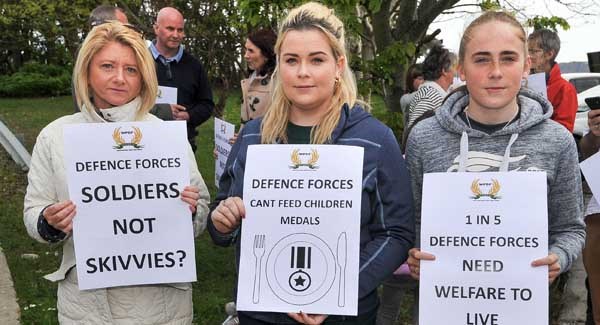
Are we still in the age of Oliver Twist?
In December 2017, Dr Paul Huddie wrote an op. ed. in response to a series of protests by the wives and dependants of the Defence Forces in Ireland and the Army in France.
Download it using the below link and button.
Example 3
Men, Women and Care
The ‘Men, Women and Care‘ project (2015-20), was run by Prof Jessica Meyer, hosted at the University of Leeds, and funded by the European Research Council.

Through its examination of issues of social, political and domestic responsibility for the care of disabled British veterans of the First World War, issues which continue to have relevance in light of the survival of service personnel from conflicts such as Iraq and Afghanistan who have suffered massive injuries and multiple amputations, the project sought not only to engage with historical discussions of the development of medical practice in the first half of the twentieth century but also, through engagement with current policy makers working with and for disabled service personnel, to make a significant intervention into contemporary social policy relating to the provision of medical and social care.
The project asked what formal and informal structures developed in the interwar years to provide medical and social care to the unprecedented number of disabled British veterans of the First World War. It further explores how these different forms of care both were shaped by gendered understandings of care-giving and utilized gender to mobilize public and private support for disabled ex-servicemen. While there were a number of previous studies of charitable organizations established for the care of disabled ex-servicemen, and of the relationships between the State, the soldier and his family in this era, ‘this ‘Men, Women and Care’ was the first study to examine the role of these formal institutions alongside and in relation to the informal social and medical care provided by the family in this period.
Together with her researcher Eilis Boyle, Prof Meyer submitted written evidence to the United Kingdom’s Women and Equalities Committee, drawing on their research to argue for ways that families could better be supported as a way of addressing the contemporary crisis in male mental health.
To hear Prof Jessica Meyer talk about her experiences of policy engagement and the policy implications of her research as a social historian of the First World War, click here.
Example 4
‘Adapting the machine’
The policy paper, entitled ‘”Adapting the machine”: welfare policy after World War One and Covid-19’, was written by Dr Michael Robinson (University of Liverpool) and published in History & Policy journal in October 2020.
Using the case study of the disabled British First World War veteran and the social policy pursued by successive British governments, especially after the war, he undertook a critical evaluation of British Conservative social policy planning, implementation, and augmentation from 2013 to the outbreak of the Covid-19 global pandemic. Through his policy paper, Dr Robinson discussed how it was because of the pressure that public sympathy put on politicians of the 1920s and 1930s that created exceptional provision for veteran disability welfare, and theorised if the same could be true of social policy more widely in the post-Covid world? Read the full paper here.
 militarywelfarehistory.com