Next special issue (2027)
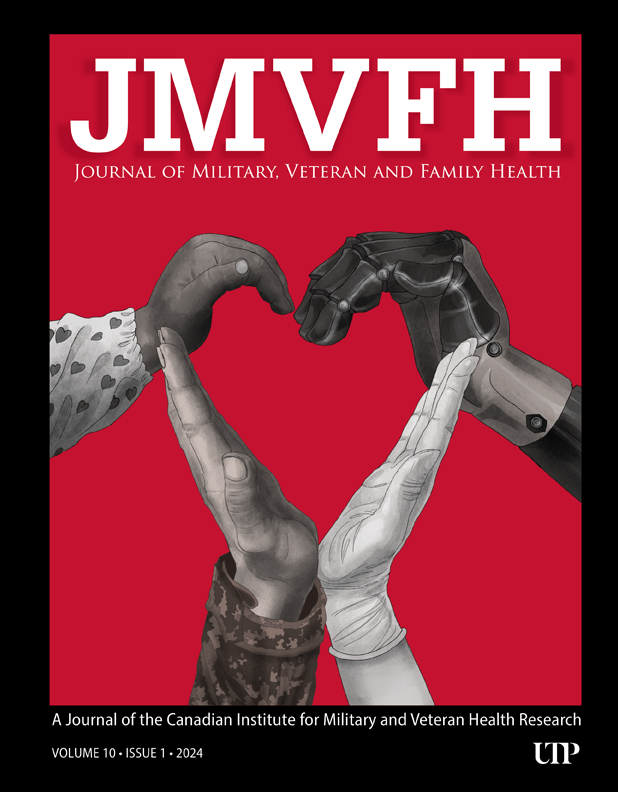
Title: ‘Medical welfare and care of military communities: a collection of historical studies’

JMVFH, special issue, September 2027
Co-edited by Dr Paul Huddie (MWHN Co-ordinator) and Dr Michael Robinson (MWHN Member) this selection of articles will come both from the papers presneted as part of the 2025-26 Wellcome-funded symposia series (hosted at the University of Birmingham and online) and from an open Call for Submissions. Entitled ‘Medical welfare and care of military communities: a collection of historical studies’, the special issue will seek high-quality articles that explore the historical healthcare provisions for military personnel and their families.
Full details below.
Call for Statements of Interest
Deadline 15 January 2026
First edited volume (2026)
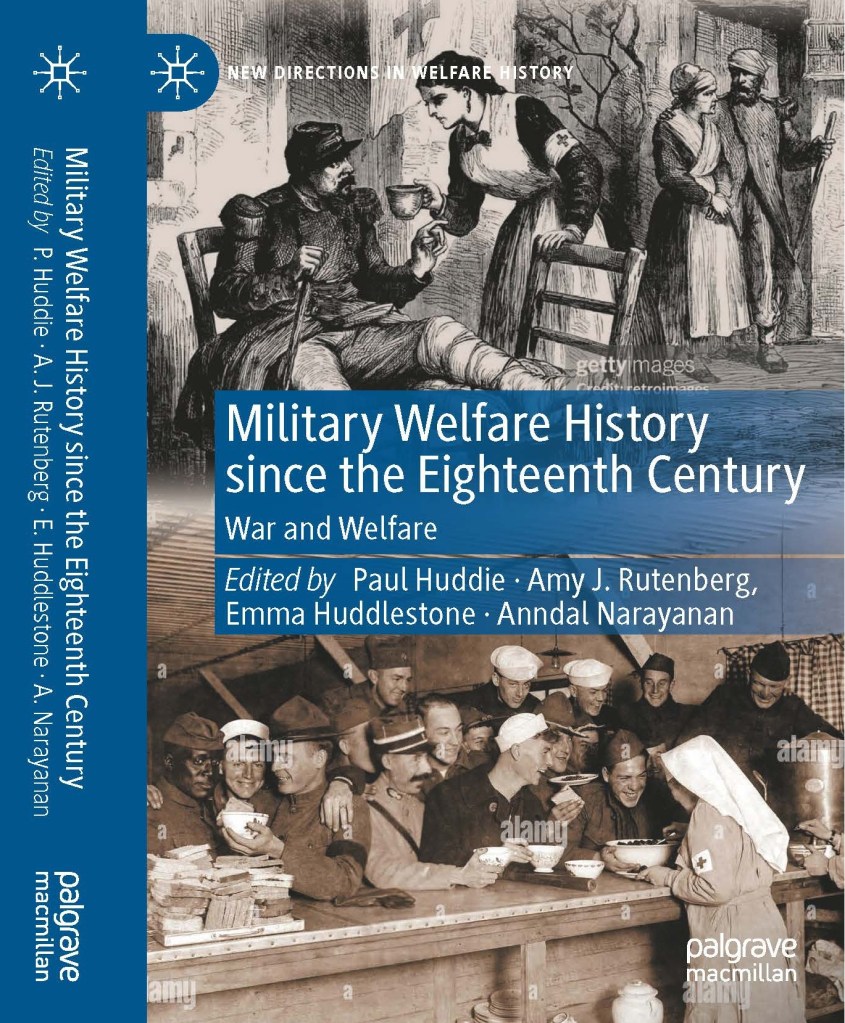
Title: Military Welfare History since the Eighteenth Century: War and Welfare
The second MWHN publication is currently in production and will be an edited volume published in 2026 by Palgrave Macmillan as part of his ‘New Directions in Welfare History’ series. This volume is co-edited by Dr Paul Huddie, Dr Emma Huddlestone, Dr Anndal Narayanan and Dr Amy J. Rutenberg and comprises an introduction and fourteen chapters; the latter of which comprises case studies that focus on several countries, across several centuries, and engage with a variety of topics and themes.

Title: ‘Military Welfare History since the Eighteenth Century: War and Welfare‘
Periods: 18c, 19c, and 20c
Conflicts: American War of Independence, Crimean War, US Civil War, WW1, Inter-war period, WW2, Algerian War, Rhodesian Bush War, and Soviet-Afghan War.
Topics: Serving personnel, service families, veterans, widows and orphans, charity and philanthropy, pensions, nursing, employment, civil-military relations, social policy, disability, and citizenship.
A quarter of the way into the twenty-first century, with conservatism once again in the ascendancy globally, Western democracies are again re-evaluating the role of the State in caring for citizens and reconsidering which citizens “deserve” which benefits. Now, therefore, is the time to reflect on the current state of welfare and its historical underpinnings. Which debates are repeating? Which are new? How does the past inform the present? To fully answer these questions, it is also necessary to identify, interrogate, and broaden our understandings of what “welfare history” is and who conducts that research.
Our proposed edited collection, Military Welfare History since the Eighteenth Century: War and Welfare, will offer a model for how those scholarly discussions can proceed. Its fifteen case-study essays and introduction will illustrate the importance of an interdisciplinary, multifocal perspective on welfare and on warfare by bringing into conversation scholars with diverse chronological, geographical, and methodological foci. It will connect those asking “war and” questions with those asking “welfare and” questions under the umbrella of “military welfare history.”
In doing so, War and Welfare will make the argument that “military welfare history” is an important concept in its own right. It links a robust body of extant research published by scholars who rarely interact with one another, and it provides a lens for further interdisciplinary collaboration and discussion. It is a concept with which all historians of militaries and of war, historians of the state, historians of medicine and nursing, and historians of welfare should contend. This volume, therefore, will highlight the importance of military welfare history as a distinct perspective on the past and offer a sampling of cutting-edge scholarship inspired by that perspective. It will also be of significant use to contemporary welfare scholars (interested in both military and civilian affairs), enabling them to better understand the historical underpinnings of present practice.
Contents
- Introduction
Part I: Mixed economies of public and private in military welfare provisions
- ‘Widowed Wretches and Pitiable Orphans’: philanthropy and military families in the long eighteenth century
- Assisters in Conflict: the charities helping soldiers’ families during the Crimean War
- Employing the British Army Wife in Clothing Manufacture from the Crimean War to the First World War
- When Charities Unite: the cooperative activities of the United Services Fund and SSAFA on behalf of ex-servicemen’s families, 1919-23
- The ‘Super-cultural USO’: the intersection between identity and morale at the National Gallery of Art, 1942-1946
Part II: Citizenship, status, and reward in military welfare
- ‘The Disquieting of the Inhabitants of this Continent’: struggles over soldiers’ accommodations during the American War of Independence
- A Higher Personal Cost: New Zealand army nurses in the First World War
- Putting a Price on Military Service: the army pension acts of the Irish Civil War, 1922-23
- Be ‘a Good Neighbor’: the veterans’ information program and the associational veterans’ welfare state in 1940s America
Part III: Empire, decolonization, nationalism, and military welfare
- The Legacy of ‘Shell Shock’ in Post-War Australia
- ‘We Were Not Sell Outs’: Second World War African ex-servicemen and the Rhodesian Bush War, c.1964-1979
- Demobilization in the ‘Time of Contempt’: the battle for Algerian War veterans’ recognition in France, 1957-1974
- ‘Bad Paper’: Vietnam veterans and the discharge upgrading project
- From Outsiders to Heroes: the relations between war veterans, the Russian state, and society
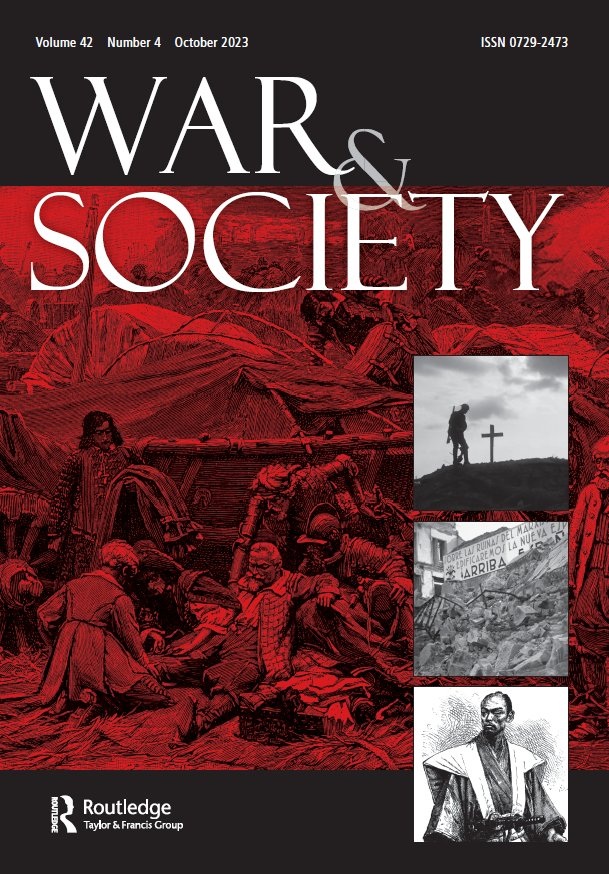
The first MWHN publication was published in the Autumn/Fall of 2023 and was a special issue of the journal War & Society. The issue comprised a selection of papers presented at the Networks’ inaugural conference, hosted online by the UCD Humanities Institute in 2021. The special issue was entitled ‘Military welfare history: what is it and why should it be considered?‘ and was the first publication to endeavour to define ‘military welfare history’.
First special issue (2023)
Title: ‘Military welfare history: what is it and why should it be considered?’

War & Society, volume 42, issue 4, October 2023
Co-edited by Dr Paul Huddie (MWHN Co-ordinator) and Dr Amy Carney (MWHN Member) the selection of articles were contributed by one of the keynotes: Prof Laura McEnaney, and four of the conference presenters: Dr Brian Hughes, Dr Eleanor O’Keeffe, Dr Silvia Correia, and Dr Colin Moore.
‘As a scholarly project, military welfare history is both well-developed and still evolving. Social scientists and humanists have been writing about military welfare for several decades, although their scholarship has not always been tagged historiographically as military welfare history, per se. There now exists a substantive community of scholars who have produced a robust body of literature. Military welfare scholars ask ‘war and’ questions, finding common cause and productive overlap with scholars who investigate the environment, labour, sexuality, popular culture, disability, state policy, law, race, ethnicity, and gender’.
The full list of articles:
- ‘Military welfare history: what is it and why should it be considered?’ by Dr Paul Huddie and Dr Amy Carney
- ‘Framing War Disability through Masculinity: The Disabled Soldiers of the First World War in Portugal’ by Prof Silvia Correia
- ‘Paying the Debts of the ‘Economy of Sacrifice’: Military Charities as Brokers in Veteran Care, 1919–1929’ by Dr Eleanor O’Keeffe
- ‘The Southern Irish Loyalists Relief Association and Irish Ex-Servicemen of the First World War, 1922–1932’ by Dr Brian Hughes
- ‘Soldiers of a forgotten empire: American memory and the battle for Filipino veterans’ benefits’ by Prof Colin Moore
- ‘Military welfare history in the classroom: converting research passions into lesson plans’ by Prof Laura McEnaney